120 years of Nobel Prize
(1901 - 2021)
Established in 1901, Nobel Prize is a prestigious annual award for outstanding achievement in such fields as Physics, Chemistry, Literature, Peace, Physiology or Medicine, and Economic Science. The prize was founded on the will of Alfred Nobel, which states that he bequeathed all of his "remaining realisable assets" to establish prizes awarded to "those who, during the preceding year, have conferred the greatest benefit to humankind". Nobel Prizes were first awarded in 1901 for five categories except for Economic Science. Not until 1968 was this category introduced and awarded.
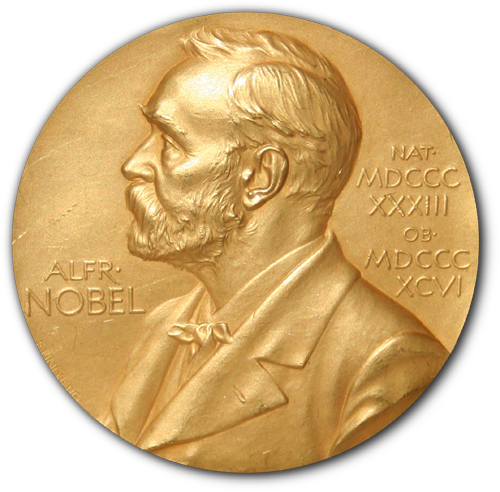
Alfred Nobel was a Swedish chemist, engineer, and industrialist most famously known for the invention of dynamite. Despite bringing him wealth, his inventions made war more devastating during that time. As a pacifist, he attempts to leave a better legacy than having improved military weaponry through his ingenuity. That was why he devoted his assets to awarding anyone with enormous contributions to the world. Only a few days left until the 2022 Nobel prize ceremony, let's go through fascinating facts and statistics about this reputable prize.
Only 75 countries have Nobel laureates
Over 120 years, there have been 976 people from 75 countries all over the world
being awarded Nobel Prizes. The map shows that approximately 40% of the world
has Nobel laureates. Most of these are developed nations from North America and Europe, while there are only a few developing countries in Asia, Africa, and South Africa.
It is also visible that the United States of America outweighs all other countries with an impressive number of 283 Nobel Prize laureates.
The United Kingdom and Germany are two outstanding European representatives with 90 and 85 Nobel winners, respectively. France follows these countries with 57 laureates and Sweden with 29 laureates. These are the top 5 countries with the most Nobel winners.
USA leads the world in Nobel Prize
Click on legend to filter a category / Hold "Shift" key and click to filter multiple categories
Overall, these top 5 countries account
for more than half of the number of Nobel
winners worldwide. This is reasonable as
these are the world's leading countries with
long-term history in science, social, and
economic development. It is noticeable that the
United States of America takes up more than a quarter of the
worldwide figure. The gap between it and these
European countries is enormous.
The United States of America also outweighs other countries in
most categories.
The only category that it does not dominate is Literature.
France, with 11 Nobel Literature awardees, surpasses United States of America with only 10 ones.
Top university affiliations are mostly from top 5 countries
Many Nobel Prize winners have affiliations with many top world universities.
They might be students, staff, or professors in there who conduct study and research in there.
There are some laureates sponsored by universities to work on their research projects.
Harvard University from the United States of America has 44 Nobel Prize winners,
which is the highest among all universities. Top 1 and top 2 ranked universities which are
Massachusetts Institute of Technology and Stanford University
also have a high number of Nobel Laureates (31 and 33 respectively).
They are the top 3 world's best education institutes over hundreds of years.
They lead the world in the quality of teaching and learning. Hence,
they have become the birthplace of many renowned politicians, social activists, and scientists.
Many other top universities from European countries are affiliated with Nobel winners. The University of Oxford (ranked 5th) and the University of Cambridge (ranked 7th) has
22 and 25 Nobel winners, respectively. Overall, most of these top 30 universities have a long founding
history and high world ranking.
Nobel prize can be shared by more than 1 laureate
Click on legend to filter a category / Hold "Shift" key and click to filter multiple categories
A Nobel prize can be shared up to three individuals. However, Nobel Peace Prize can be awarded to organisations of more than three people. Nobel Prizes are not awarded posthumously. In case a person is awarded but passes away before receiving it, the prize is still presented. It is observable that Physiology or Medicine category has the highest number of Nobel laureates overall and shared by three laureates. Meanwhile, Literature category has the most individual laureates but no three-shared prize awardees. Physics category has the highest number of winners with prize shared by two.
Nobel prize can make a laureate a millionaire
Click on legend to filter a category / Hold "Shift" key and click to filter multiple categories
Money prizes awarded to Nobel laureates are taken from the Nobel
Foundation.
This fund was established by Alfred Nobel's fortune, which was
31 million SEK (c. US$ 280 million today).
The foundation's investments have become more profitable owing to the exemption from all taxes in Sweden since 1946 and investment taxes in the USA since 1953.
In 2007, the fund amounted to
3.628 billion SEK (c. US$ 600 million today).
The amount of prize money depends on how much money the foundation can award each year.
Moreover, the money prize is divided if there is prize share.
In 2009, the monetary award per category was 10 million SEK (c. US$ 1.4 million today) but decreased to 8 million SEK (c. US$ 1.4 million today) in 2012.
If two laureates share the prize in a category, the award grant is divided equally between the
recipients. If there are three laureates, the awarding committee has the option of dividing the grant equally or
awarding one-half to one recipient and one-quarter to each of the others.
With age comes Nobel Prize
Nobel laureates tend to devote most of their lives to pursuing their interested field. Hence, it is visible that the overall median and average age of Nobel winners are between 60 and 70 years old. However, this is different for each category. While the median age of laureates with Nobel prizes in such categories as Economic Sciences, Physiology or Medicine, Chemistry, and Literature is close to 60, that of Nobel Physics laureates is close to 60. Most Nobel Peace Laureates seem older, as their median age is above 60.
Besides, there are some exceptional cases of young Nobel winners. The youngest Nobel laureate of all time is Malala Yousafzai, who shared the Nobel Peace Prize when she was only 17 years old for struggling against suppression of children and young people and for the right of all children to education. Before her, Lawrence Bragg was the youngest awardee. He was only 25 years old when he shared Nobel Physics Prize with his father in 1915 for their services in analysis of crystal structure by means of X-rays.
This visualisation is created by Xuan Nhat Minh Nguyen